News
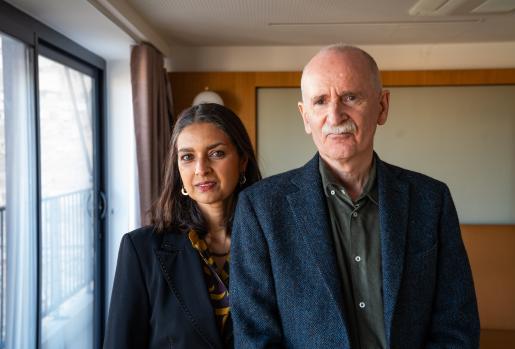
On November 4, 2025, award-winning author Lauren Elkin joined the AUP community for the first public reading of her 2026 book, Vocal Break: On Women, Music, and Power. Elkin is an American essayist, novelist, and French translator whose works have been featured in The New York Times Editor’s Choice picks, translated into nine languages, and have appeared in numerous publications including the London Review of Books, The Guardian, and The Observer. She is currently a guest lecturer for the first cohort of AUP’s MFA in Creative Writing.
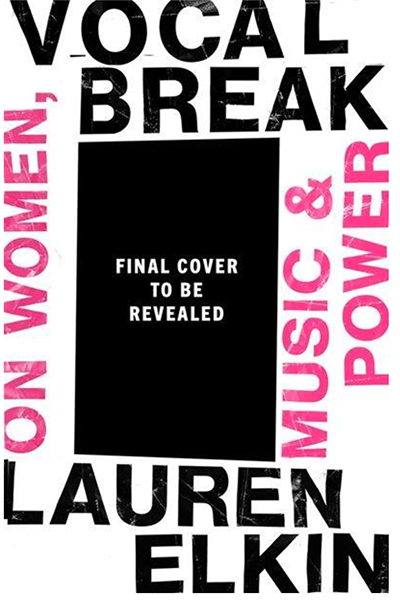
In her new non-fiction work, Elkin seamlessly braids her experience growing up as a classically trained vocalist with a cultural analysis of how the vocal break—the switch from a singer’s chest voice to their falsetto—has been understood by cultures throughout history leading up to today. The book is an amalgam of memoir and research discussing themes of sexism, racism, pop culture capitalism, and their reflection on how societies treat women who dare to sing.
As she began her inaugural reading of Vocal Break, Elkin quipped that her lack of nerves at sharing her hybrid work for the first time was, “a testament to my comfort at AUP.” This comfort paved the way for a multi-faceted discussion following the reading led by AUP professor Amanda Dennis. Students and faculty alike queried Elkin on how she bridges the break in her writing to form a hybrid of styles: memoir, research essay, and socio-cultural study. She is able to manage it all in a performance of orchestral proportions.
This specific hybrid form has been emphasized by Elkin during her tenure as a module guest lecturer for the University's MFA program. Her course covers the works of renowned thinkers, such as Louis Aragon and Walter Benjamin, and how the architectural relevance of the Paris passages came to be crucial to the development of community and thought in 19th century Paris. Perhaps the passage—the traditional word for ‘vocal range’ in Italian, as Elkin pointed out—is analogous to the author's writing style in her new book: a seamless transition from memoir to historical study, with plenty of breaks for reflection.
Throughout the reading and subsequent discussion, Elkin filled the room with a warm and familiar atmosphere. She described working on previous non-fiction books, Flâneuse (2017) and Art Monsters (2023), and the challenge of combining memoir and research into a hybrid form. Elkin’s reading of Vocal Break shows a seamless balance of the two. While the non-fiction work is a study of pop culture and the gendered world of voice, she weaves into her writing a deeply moving history of her personal background as a soprano. The memoir elements are as riveting as the socio-cultural research.
Elkin’s writing style brought out questions from the listeners—students, faculty, and visitors alike. Following her introduction on Vocal Break, she read excerpts from her debut novel Scaffolding (2024). Later, when asked about the bridge between genres, she reflected on her own evolution as a writer, “I used to feel like my fiction and non-fiction were very far apart [...] I didn’t feel as though I was using all of the colors of my voice.” Elkin went on to discuss the challenges brought forth with finding a similar cadence in fiction and non-fiction pieces. Just as with connecting memoir and historical research, she emphasized the importance of finding musicality in one’s own writing. The author spoke of her connection to musical theatre—and performance, in a broader sense. It allowed her to find rhythm in her style and ultimately helped unite her prose.
Elkin’s study of her own relationship with music seems to mirror the issue of the break examined in her new book. Just as there is a disconnect between a chest voice and a falsetto, Elkin discusses her own rift between the desire of the heart to compare personal experiences with a music industry deep dive, and the logic of the head to not dive too deep into pop culture, lest it be construed as banal. She reflected that during her writing process, the nerves of her change in subject matter worried her. Elkin joked that she used to translate Simone de Beauvoir; what would people think now that she was studying pop stars? Yet, she emphasized the importance of this complexity. “I’m very interested in voices and how people use them to hide [...] especially in academia.”
From the careful dissection of her own history with singing to the introduction of the cultural lens of the vocal break, it’s clear Elkin will succeed in bridging the divide.
By Madeleine Murdock